
Agree the source contract
Document which records arrive, their identifiers, units, timing and permitted purpose. State whether a source is API-based, file-based or manually submitted; a logo is not proof of an active integration.
Define how each source becomes useful business information.
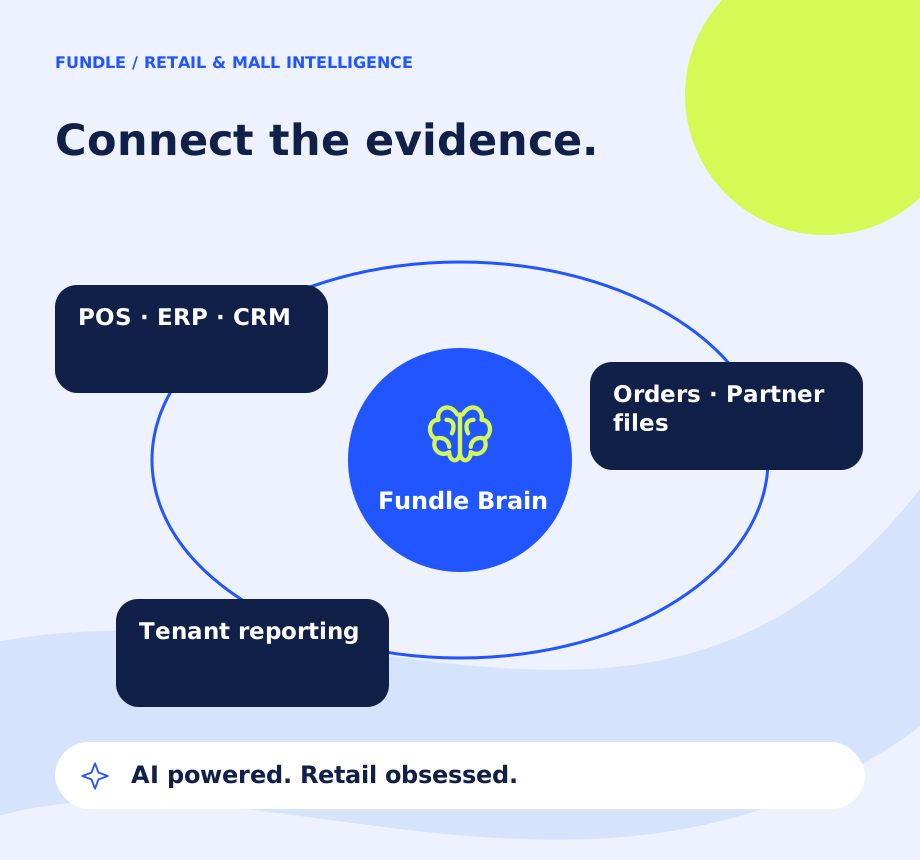
24 seconds · Silent film with on-screen captions · Workflow illustration.
A connection needs a source contract.
Agree the source → Validate the records → Preserve the hierarchy → Own the operation. Define identifiers, reporting scope, validation and ownership before treating incoming records as business evidence.
A connection needs a source contract. Explore the infographic below the film for the full workflow.
Define identifiers, reporting scope, validation and ownership before treating incoming records as business evidence.. Connect the question, the evidence and the next useful action.
Define identifiers, reporting scope, validation and ownership before treating incoming records as business evidence.
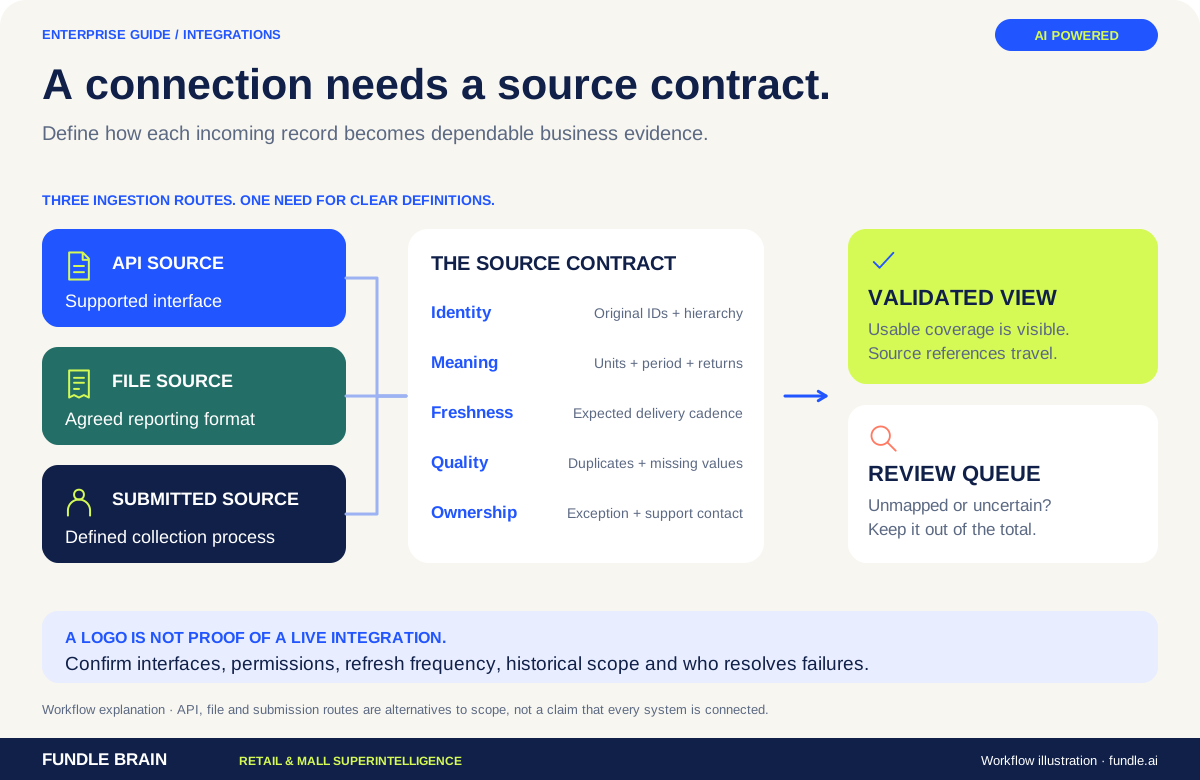
Document which records arrive, their identifiers, units, timing and permitted purpose. State whether a source is API-based, file-based or manually submitted; a logo is not proof of an active integration.
Check duplicates, missing records, unmapped products, inconsistent dates and returns. Keep uncertain items in a review queue so the business view can show its actual coverage.
Customer, store, tenant, product and partner definitions make comparisons possible. Agree how identifiers map across systems and retain references to the original records.
Define who monitors freshness, resolves failures and approves mapping or rule changes. Refresh frequency, historical backfill and support responsibility belong in the implementation scope.
Bring a business question. Let’s connect the people, the data and the workflow.
Abhinav · Fundle.ai
Loyalty & ADSR Expert · Online