Start with the behaviour you want to change. A programme built to increase purchase frequency needs a different reward structure from one built to grow basket size or bring customers into a new category.
Define the commercial objective
Choose a primary outcome and a baseline period. Track repeat purchase, contribution after incentives and reward cost together. A programme can generate redemptions without generating profitable incremental demand.
Build the economics first
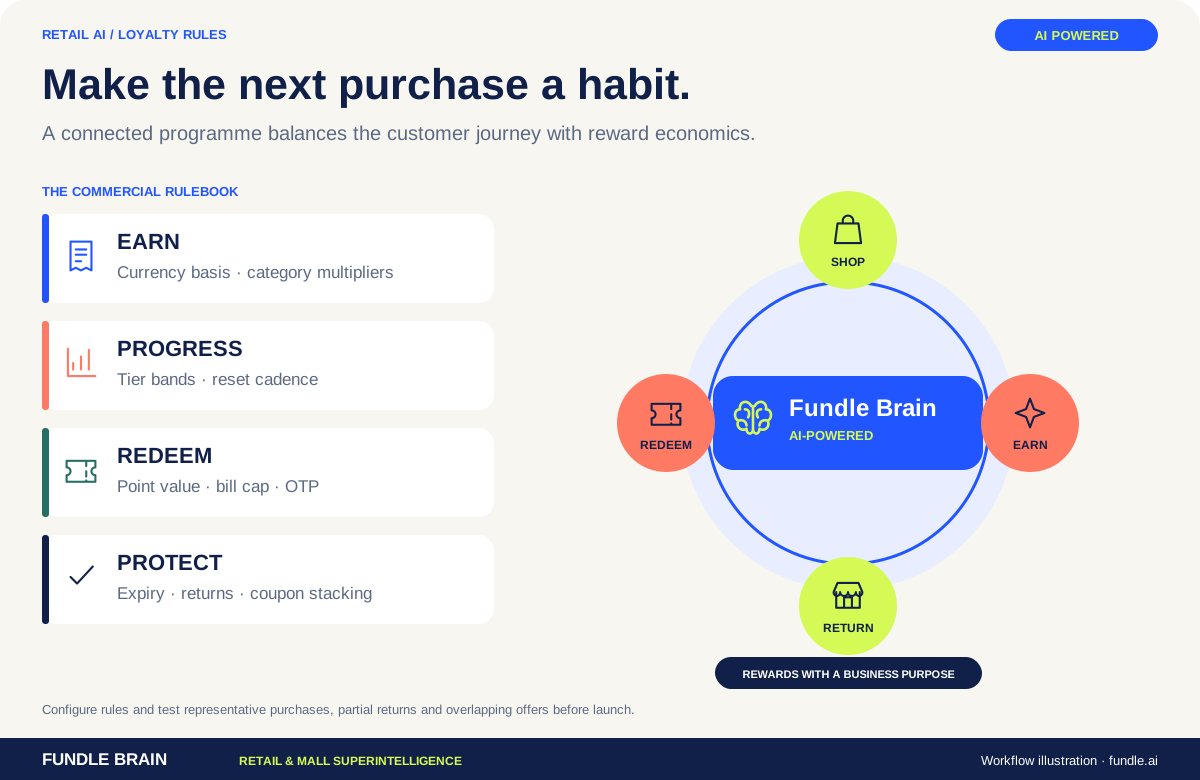
Define the earning base, earn rate, point value, redemption cap and expiry. Include returns, cancellations and liability treatment. Model several customer baskets and check whether the programme remains affordable.
Make eligibility understandable
Specify which stores, channels, products and customers participate. Set explicit rules for combined promotions, staff purchases and duplicate transactions. A clear rule is easier to explain and operate.
Design the important moments
Map enrolment, the first earning event, progress to a benefit, redemption and the next visit. Add welcome, birthday or referral journeys only when their purpose and cost are clear.
Pilot before scaling
Choose a defined store or cohort scope, verify balances and messaging, and monitor support issues. Compare outcomes over a suitable purchase cycle before widening the programme.
Build a programme specification
Write down the eligible customer, transaction base, earn rate, point value, expiry rule and redemption limits before choosing tier names. Include how taxes, discounted items, returns and cancellations are treated. A programme that is simple to explain but ambiguous to operate creates avoidable service work.
Test the edge cases before launch
Use representative baskets: a normal purchase, a part return, a mixed eligible/ineligible bill, an expired balance and a redemption at the minimum threshold. Check the expected balance movement and customer communication for each. Record the person who approves a rule change.
Separate recognition from reward cost
Points are one instrument. Tiers, early access, service and relevant communication can also shape the relationship. Model the cost of benefits and the likely redemption exposure alongside the behaviour you want to encourage. Avoid giving every customer the same discount by default.
A practical launch sequence
Agree the business objective, validate the source data, configure rules, review sample journeys, train store teams and pilot with a defined cohort. Track enrolment quality, repeat behaviour, redemption friction and contribution. Expand after the operating exceptions have a clear owner.
Put the guide to work.
Map the principle to your own data and operating process.
Explore the related workflowFundle editorial · Updated 12 October 2026 · Practical guidance; examples are illustrative.