
Establish what is due
Use the tenant master, trading calendar and reporting rules to define the day’s expected records. Record known closures and exceptions.
Automated Daily Sales Reporting connects tenant submissions and sales intelligence so mall teams know what is complete, what changed and what needs attention.
Which tenants have not reported—and which need attention?
24 seconds · Silent film with on-screen captions · Workflow illustration.
Which tenants have not reported—and which need attention?
Collect → Validate → Compare → Brief. Daily submissions + POS files + tenant hierarchy
A complete trading picture starts with every tenant. Explore the infographic below the film for the full workflow.
Prepare follow-ups and a management brief. Reporting completion · like-for-like sales · trading density
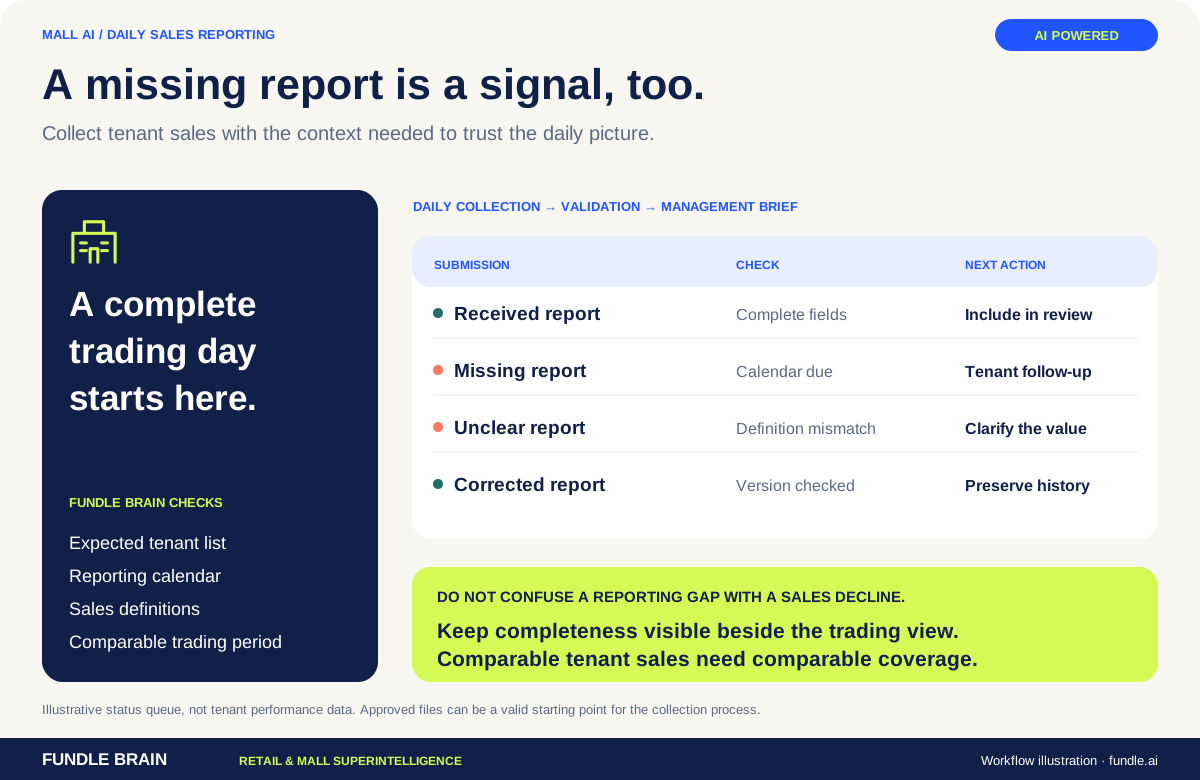
Automated Daily Sales Reporting is the foundation of mall intelligence. The operating workflow combines the expected tenant submissions, received sales and validation exceptions before turning the trading day into a management brief.
Maintain the tenant reporting calendar and expected submissions. Distinguish received, pending, late, closed and confirmed zero-sales records.
Agree gross or net sales, tax treatment, returns and adjustments. Retain the reporting period and source so corrections can be understood later.
Use consistent tenant sets and comparable trading periods. Separate new openings, closures, partial trading and reporting gaps from underlying growth.
Give tenant relations the missing-submission list, finance the validation exceptions and leadership the completed trading summary. Each output should identify the relevant owner.
Start with the question. Define the data and workflow needed to answer it.
Tenant master, daily sales, reporting calendar, area definitions and approved POS or file connections.
Completion status, exception queues, tenant comparisons and daily management briefs.
Track submission completion, timeliness, validation exceptions and resolution time before interpreting sales growth. For trading density, always state the sales period, area basis and area unit.
ADSR means Automated Daily Sales Reporting. Trading density is a separate sales-per-area metric and should use an explicitly defined period and area.
Divide the selected sales measure by the agreed trading area for a stated period. Use consistent units and area definitions; a daily measure and a monthly measure are not directly interchangeable.
No. Missing and confirmed zero-sales records must remain distinct. Otherwise, late reporting creates artificial declines and misleading tenant comparisons.
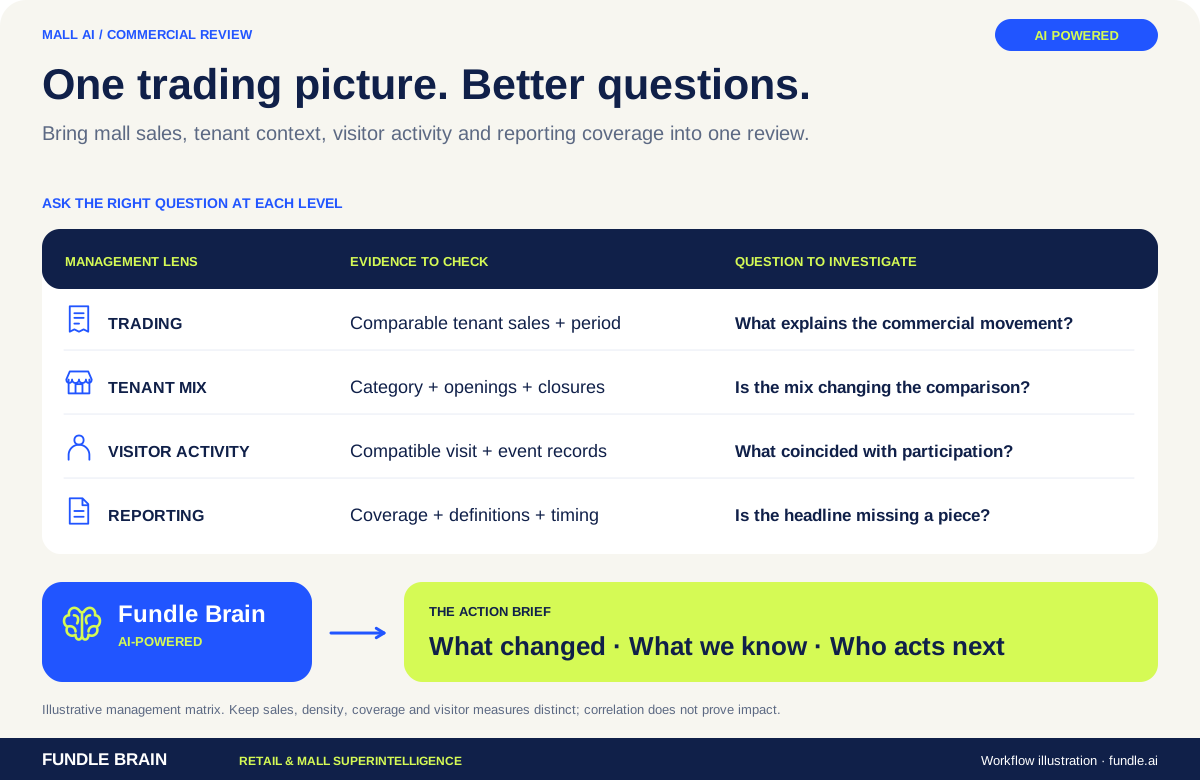
Bring tenant performance, reporting gaps, campaigns and operating priorities into a practical management conversation.
Explore the platform ↗
Connect eligible purchases, visitor rewards and tenant participation into a mall-wide programme with clear earning and redemption rules.
Explore the platform ↗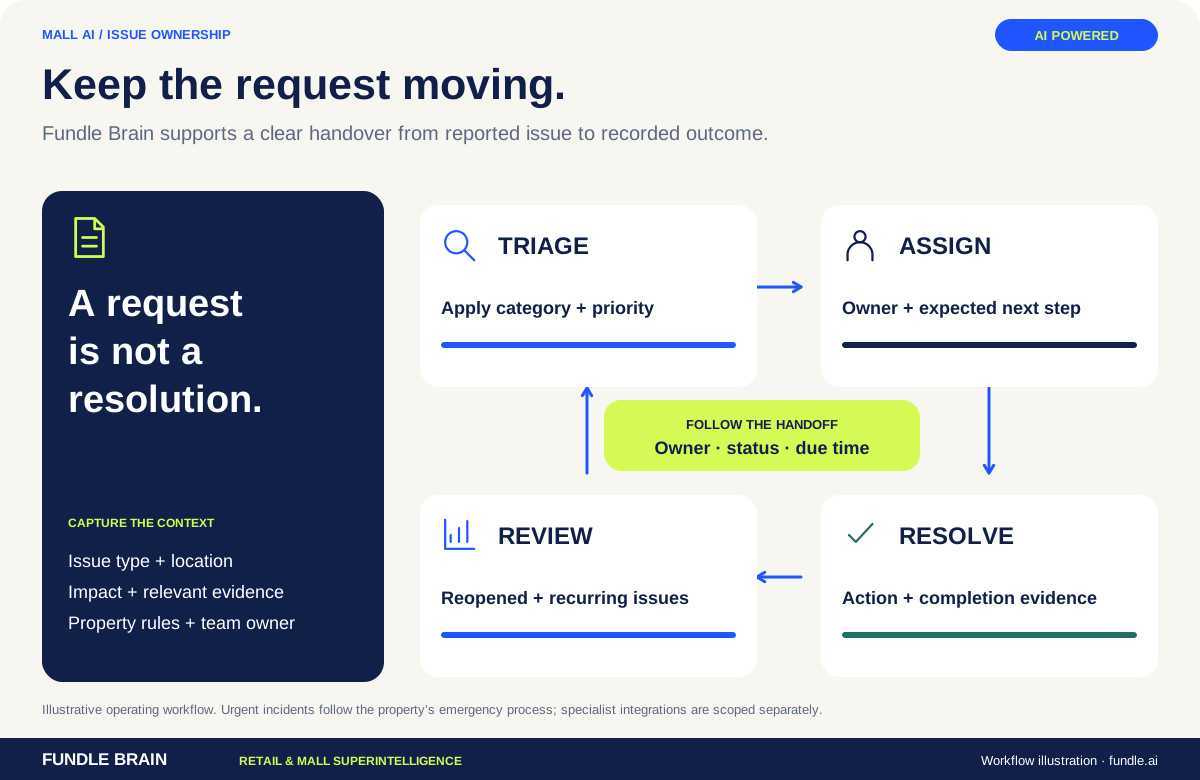
Connect service requests, ownership and escalation into a clear workflow for mall operating teams.
Explore the platform ↗Bring us one business problem. We’ll map the data, the workflow and the next useful action.
Abhinav · Fundle.ai
Loyalty & ADSR Expert · Online