
Map the funnel
Define the event sequence and sources that describe discovery, cart, checkout and purchase. Confirm that events refer to the same reporting period and are not duplicated.
Bring product discovery, customer history and retention into the same commercial conversation across your store and online channels.
Where are shoppers dropping out of the purchase journey?
24 seconds · Silent film with on-screen captions · Workflow illustration.
Where are shoppers dropping out of the purchase journey?
Discover → Consider → Purchase → Return. Catalogue + browsing + orders + customer history
Connect discovery, purchase and the next visit. Explore the infographic below the film for the full workflow.
Plan product, journey and recovery improvements. Conversion · repeat orders · contribution per order
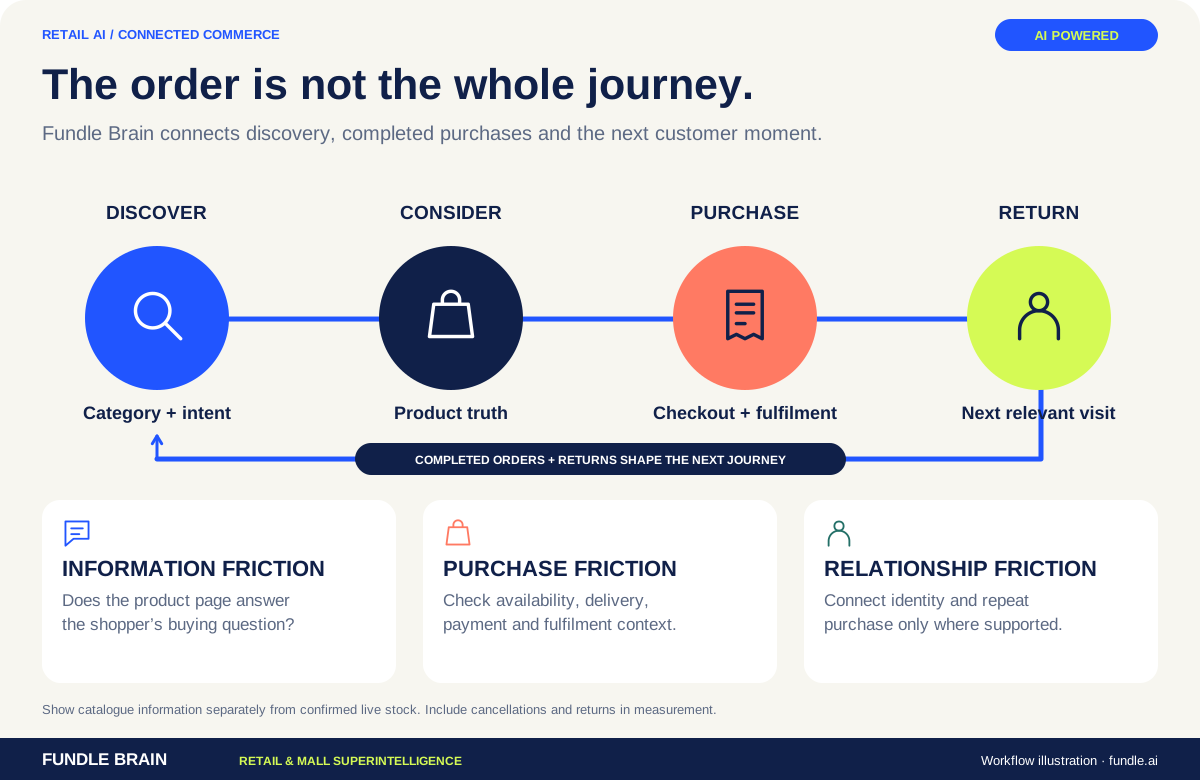
The online store is one part of a retail business. Discovery, checkout, returns and the next purchase should be understood alongside the catalogue, store network and customer history available to the business.
Review the route from category to product, cart and checkout. Separate a product-information problem from delivery, price, payment or availability friction.
Organise product discovery around needs, attributes and category logic. Use accurate catalogue information and distinguish a recommendation from confirmed stock availability.
Agree how orders and store transactions relate to a known customer. Keep anonymous browsing and unmatched records separate from confirmed identity links.
Connect the completed order, return outcome and category purchase cycle to the next relevant journey. A cancelled or returned purchase should not trigger the same follow-up as a successful one.
Start with the question. Define the data and workflow needed to answer it.
Product catalogue, order history, event data, identity keys and channel permissions.
Journey diagnosis, merchandising recommendations and prioritised conversion experiments.
Use conversion by journey stage, completed orders, return-adjusted revenue, repeat purchase and contribution per order. Compare like traffic and categories before attributing movement to a website change.
The starting point is your existing commerce stack. Scope the required data and workflows before choosing integration or replacement.
They can be connected where reliable customer identifiers and permitted data use are available. Define matching rules and show the remaining unmatched share.
Only workflows that promise live availability need it. A discovery or enquiry journey can start with maintained catalogue data and store confirmation, clearly labelled as such.
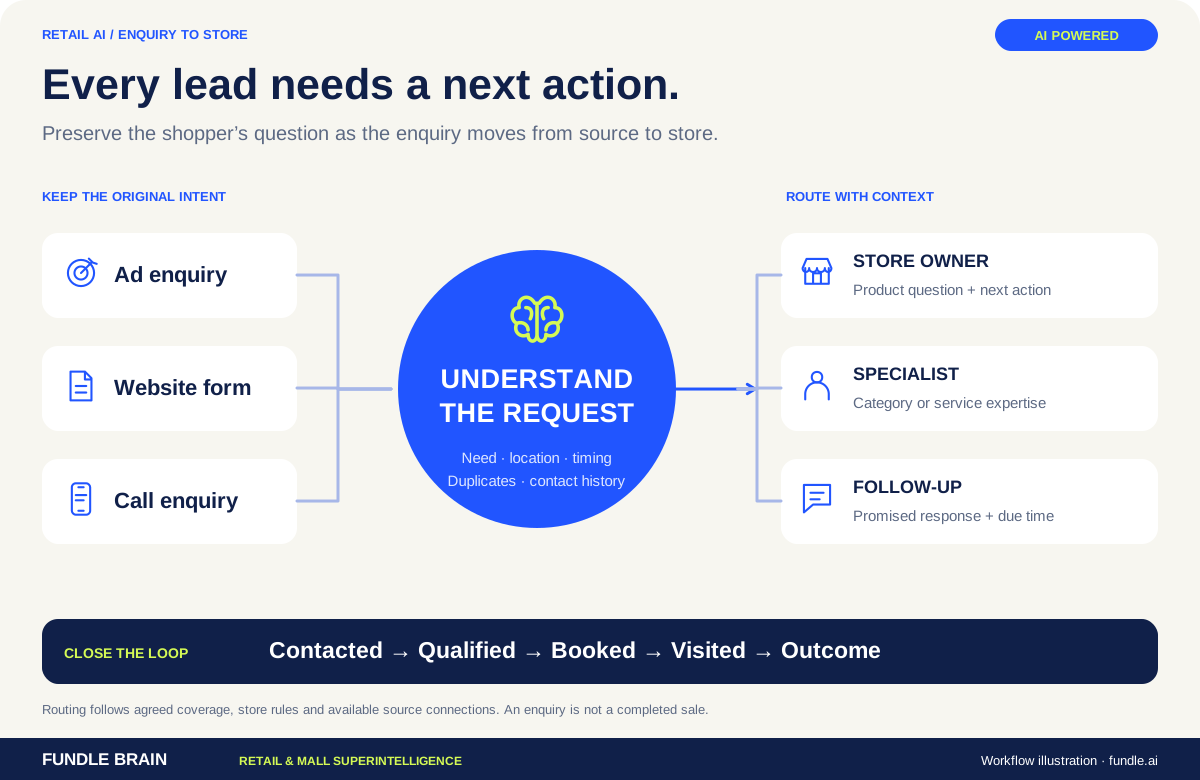
Bring lead sources, customer intent and follow-up into one journey from first interest to a qualified handover.
Explore the platform ↗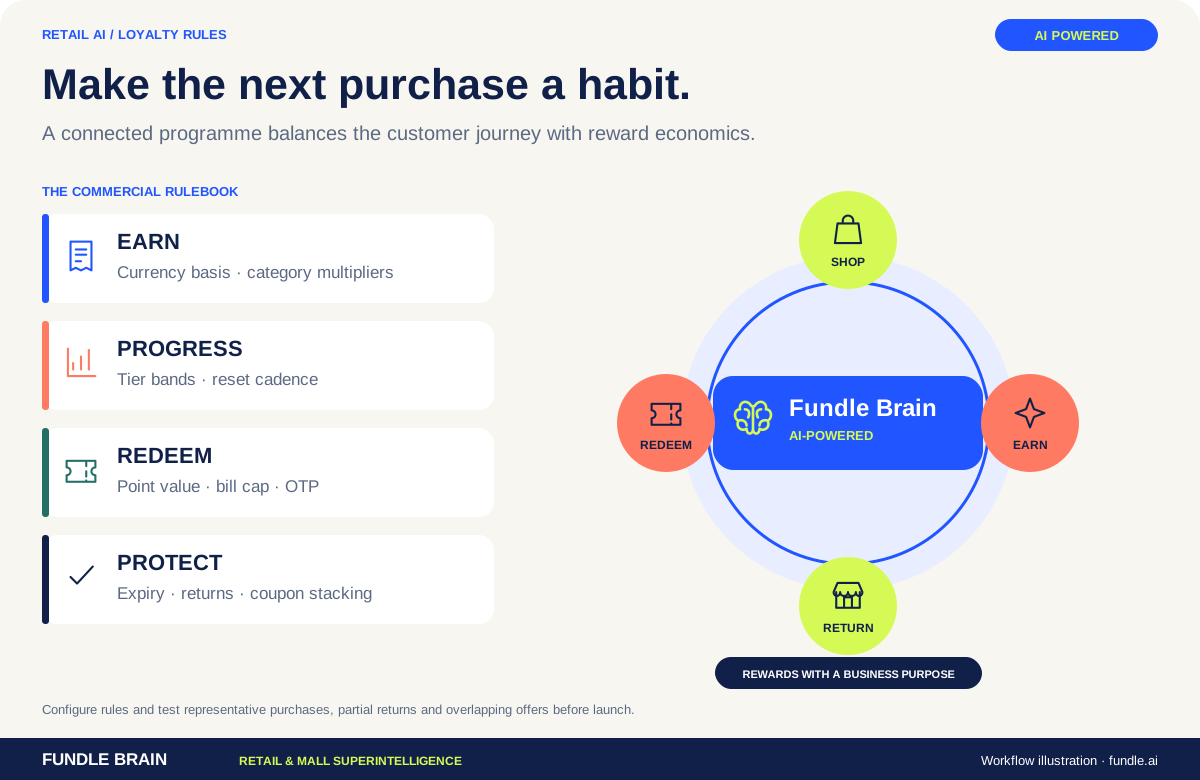
Connect points, tiers, customer behaviour and campaign decisions around one goal: a stronger relationship after every sale.
Explore the platform ↗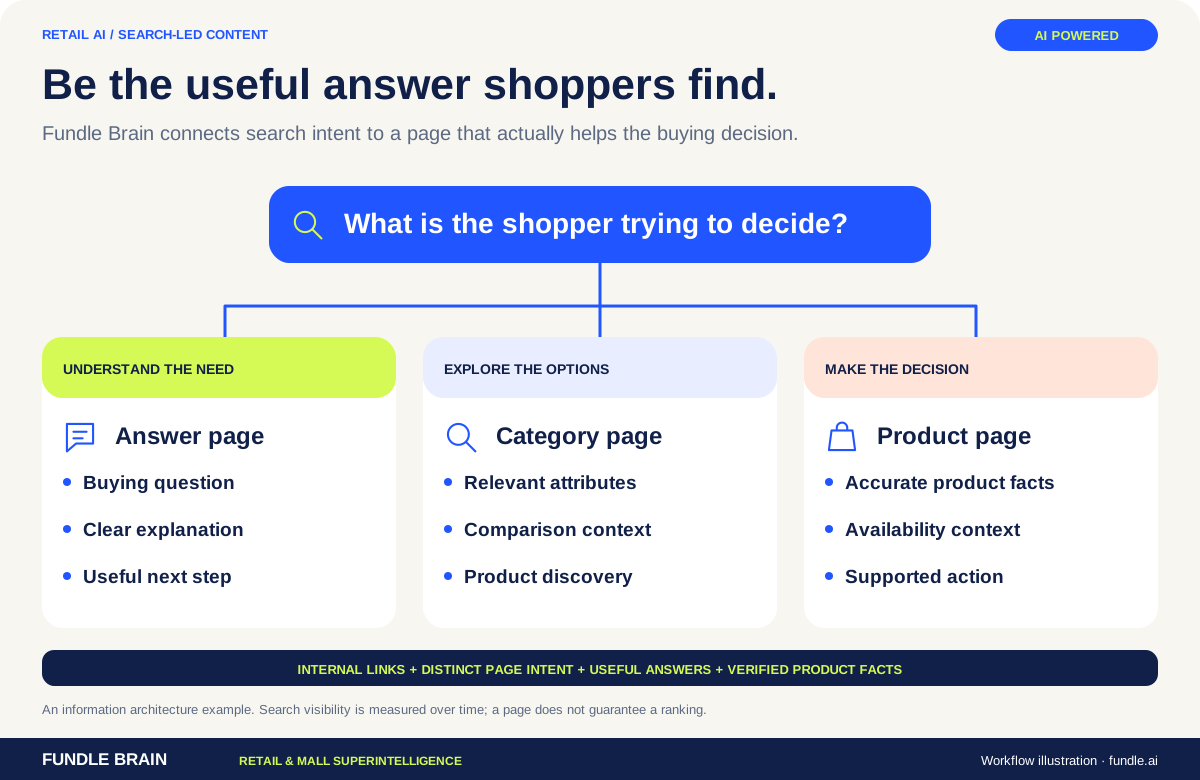
Connect technical SEO, meaningful retail content and answer-ready pages to the products, categories and questions your customers care about.
Explore the platform ↗Bring us one business problem. We’ll map the data, the workflow and the next useful action.
Abhinav · Fundle.ai
Loyalty & ADSR Expert · Online