
Bring in matching periods
Collect sales, cancellations, returns, settlement files and the applicable fee schedules. Preserve each file’s date range and original identifiers.
Connect order, return, commission and settlement records so your team can investigate the difference with evidence.
Show me marketplace deductions that need review.
24 seconds · Silent film with on-screen captions · Workflow illustration.
Show me marketplace deductions that need review.
Order → Return / fee → Settlement → Investigate. Orders + returns + settlements + fee rules
Follow the sale all the way to settlement. Explore the infographic below the film for the full workflow.
Build an exception queue with source-row evidence. Unexplained deductions · resolution time · recovered value
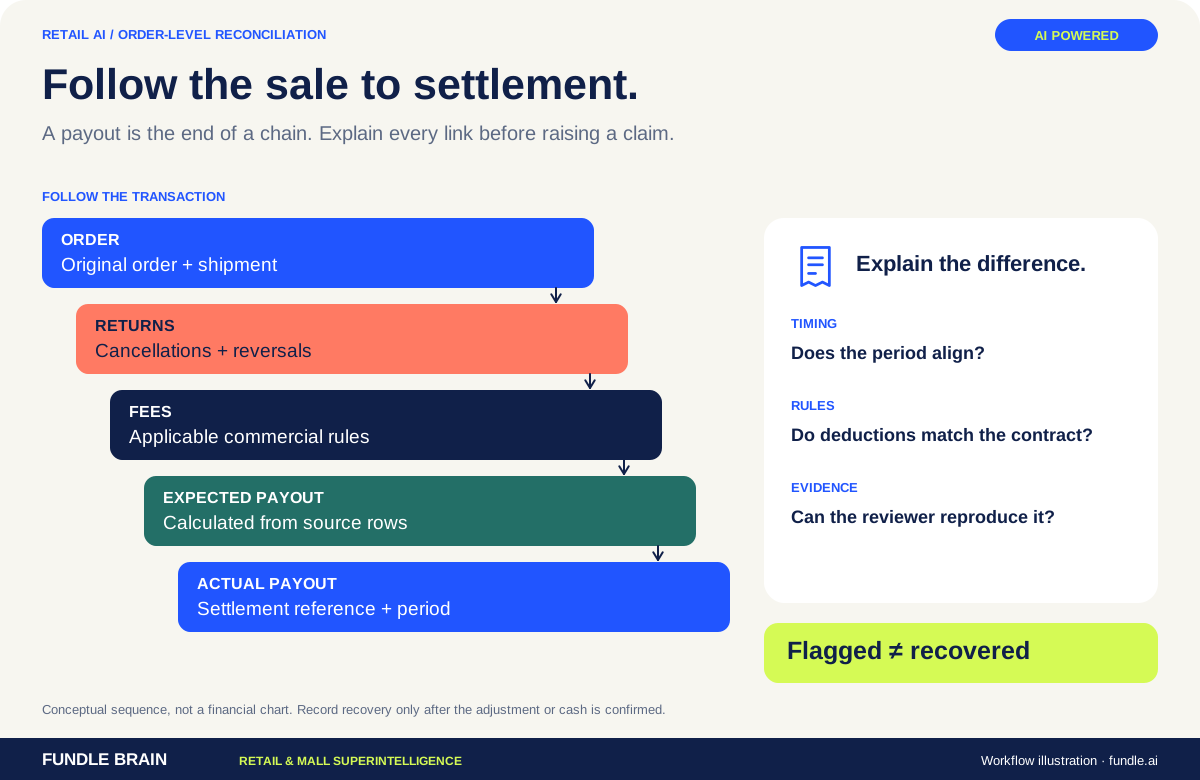
Marketplace finance is a chain of events: an order, a shipment, a return, a fee and a payout. Fundle brings the records into a common structure so the team can see which differences are expected, which are timing-related and which require a claim.
Review sales, expected commission, deductions and settlement in the same channel and period context. Use category comparisons and return behaviour to explain changes.
Map channel identifiers, articles and fee rules to the relevant business records. Keep unmapped orders visible instead of allowing them to disappear from reconciliation totals.
The workspace includes uploads, sales ledger, calculations, reconciliation, discrepancies and recovery sections. Organise the investigation around the source records and the reason for the difference.
Carry the order identifier, settlement reference, expected amount, actual amount and calculation into the review. A finance owner needs enough evidence to reproduce the exception.
Start with the question. Define the data and workflow needed to answer it.
Order and settlement files, returns, channel identifiers, fee schedules and contract-specific rules.
Reconciliation results, unmapped records, deduction explanations and review-ready exceptions.
Measure matched-record coverage, unexplained variance, age of open cases and confirmed recovery. A flagged amount is an investigation value; recovery is recorded only when the adjustment or cash is confirmed.
No. A deployment can use approved files or a supported API. The connection method, coverage and refresh frequency are agreed for each marketplace.
Yes. File-based reconciliation is a valid starting point. Agree the expected formats, reporting cadence and commercial rules before expanding to any supported API connection.
Totals can hide offsetting errors. The source row lets the reviewer trace an exception back to the original order or payout and explain the calculation without rebuilding it manually.
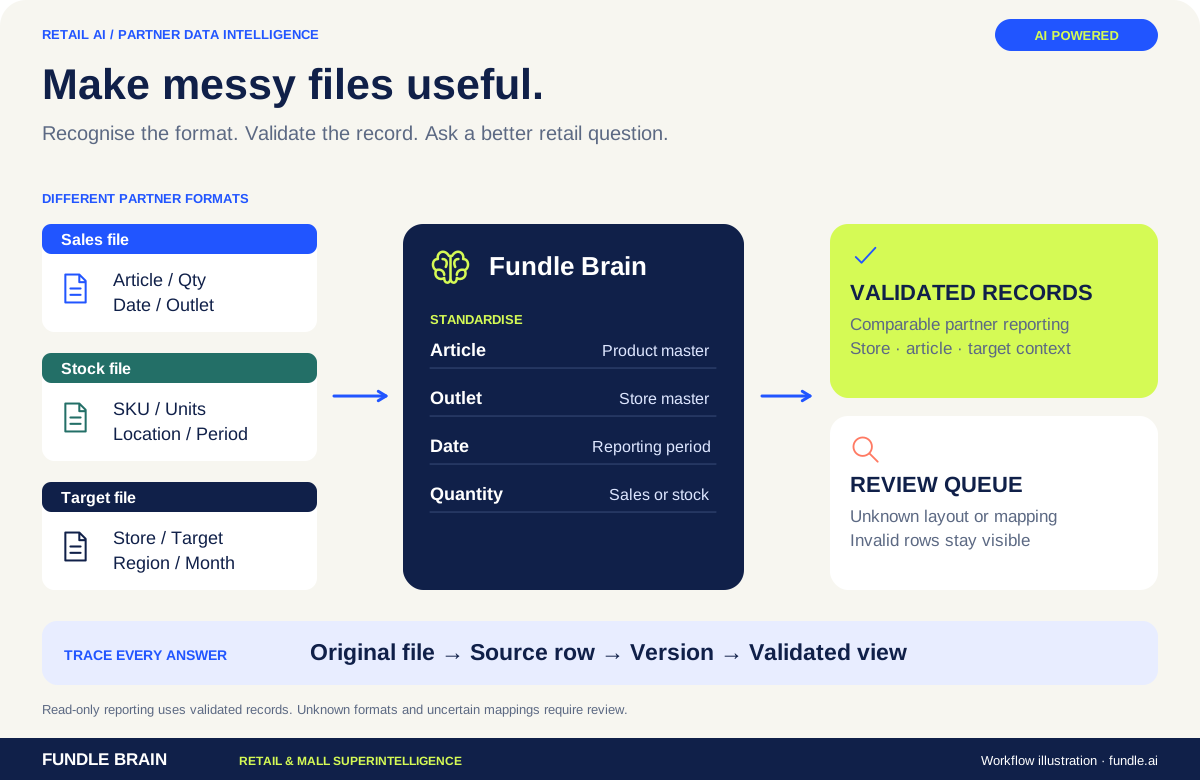
Turn inconsistent partner sales files into traceable secondary-sales intelligence for your multi-brand outlet and shop-in-shop business.
Explore the platform ↗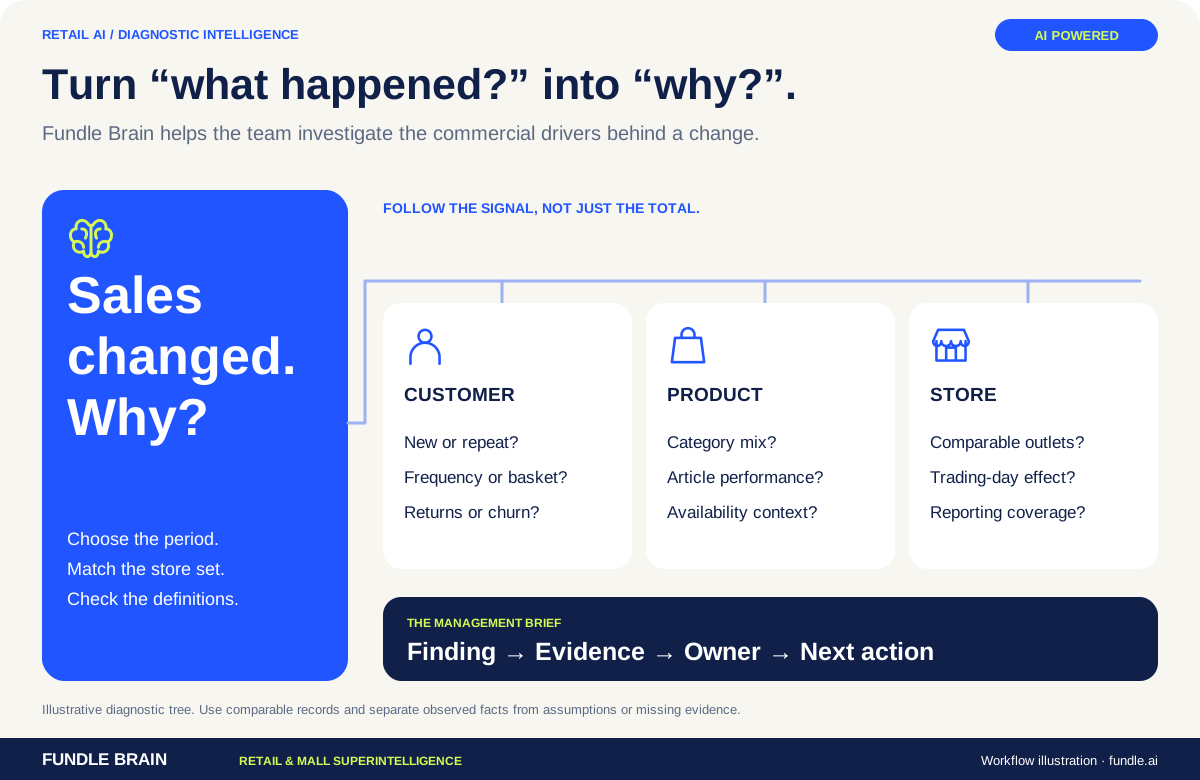
Explore sales, customer behaviour and store performance in business language, with the data context behind each answer.
Explore the platform ↗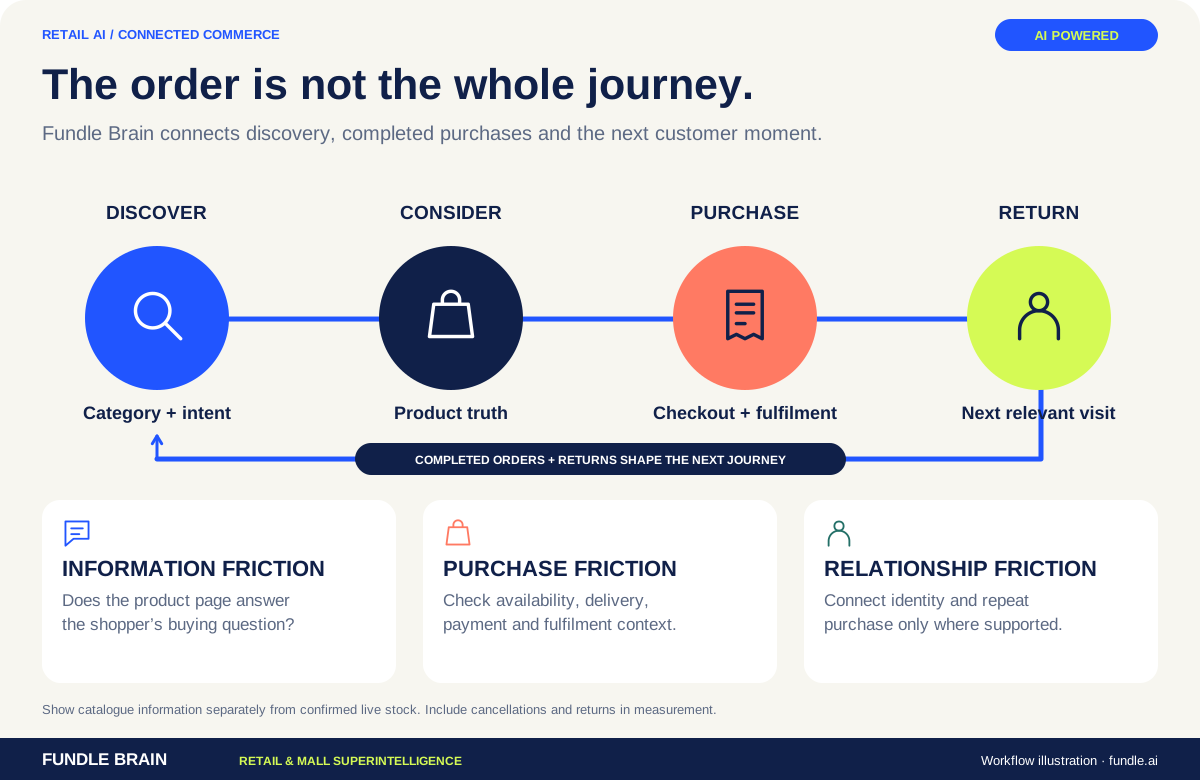
Bring product discovery, customer history and retention into the same commercial conversation across your store and online channels.
Explore the platform ↗Bring us one business problem. We’ll map the data, the workflow and the next useful action.
Hi 👋 I'm Abhinav
Got a loyalty or ADSR question?