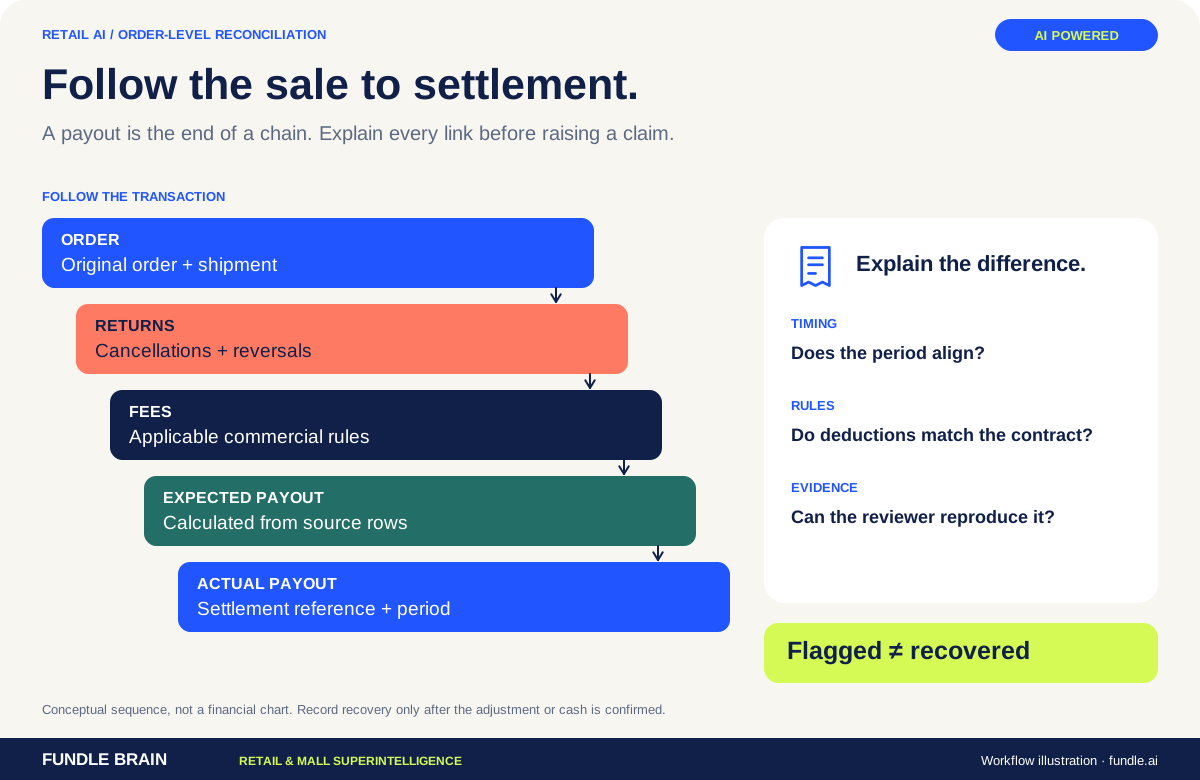

A marketplace sales total is not the same as a settlement. Reconciliation explains the path from an order to the cash received and isolates differences that require investigation.
Collect the right source records
Bring together orders, returns, cancellations, fee schedules and settlement files for the same period. Keep source identifiers rather than relying only on aggregate totals.
Normalise without losing evidence
Standardise dates, identifiers and amounts while retaining the original row and file reference. Unmapped records should remain visible in an exception queue.
Calculate the expected outcome
Apply the relevant commercial rules to the order. Identify timing differences and normal deductions before labelling a gap as leakage.
Route genuine exceptions
Provide the calculation, source records and discrepancy reason to the responsible finance owner. A flagged difference is a review item, not proof of recoverable revenue.
Track resolution separately
Distinguish identified, disputed, accepted and actually recovered amounts. Use confirmed recovery and resolution time to judge the process.
Build an order-to-settlement spine
Retain marketplace, order, order-line, shipment, return and settlement identifiers at their available grain. One order can have multiple shipments, deductions or payout periods. Do not force a one-row-per-order assumption onto a more complex settlement model.
Separate expected from unexplained
Translate the applicable fee schedule into versioned rules. Distinguish a known commission or return charge from a deduction that cannot be reconciled to the source. Keep the underlying amounts and calculation basis visible to the reviewer.
Prepare a useful exception packet
An exception should include the affected identifiers, source statements, expected calculation, observed difference and current status. Assign an owner and record whether the issue is timing, mapping, contractual interpretation or a potential recovery item.
Close the loop carefully
A discrepancy is not a recovered amount. Track review, submission, marketplace response and confirmed adjustment separately. Retain evidence of the resolution and feed recurring mapping or rule issues back into the next reconciliation run.
Put the guide to work.
Map the principle to your own data and operating process.
Explore the related workflowFundle editorial · Updated 12 October 2026 · Practical guidance; examples are illustrative.