First-party data becomes valuable when it can support a reliable decision. Start with the customer relationship, the intended use and the quality of the underlying records.
Define the question first
Choose a concrete decision such as a retention audience, store comparison or replenishment discussion. Collect the fields needed to answer it rather than accumulating data without a purpose.
Create dependable identity links
Agree identifiers and matching rules. Keep uncertainty visible and avoid merging records based on weak similarities.
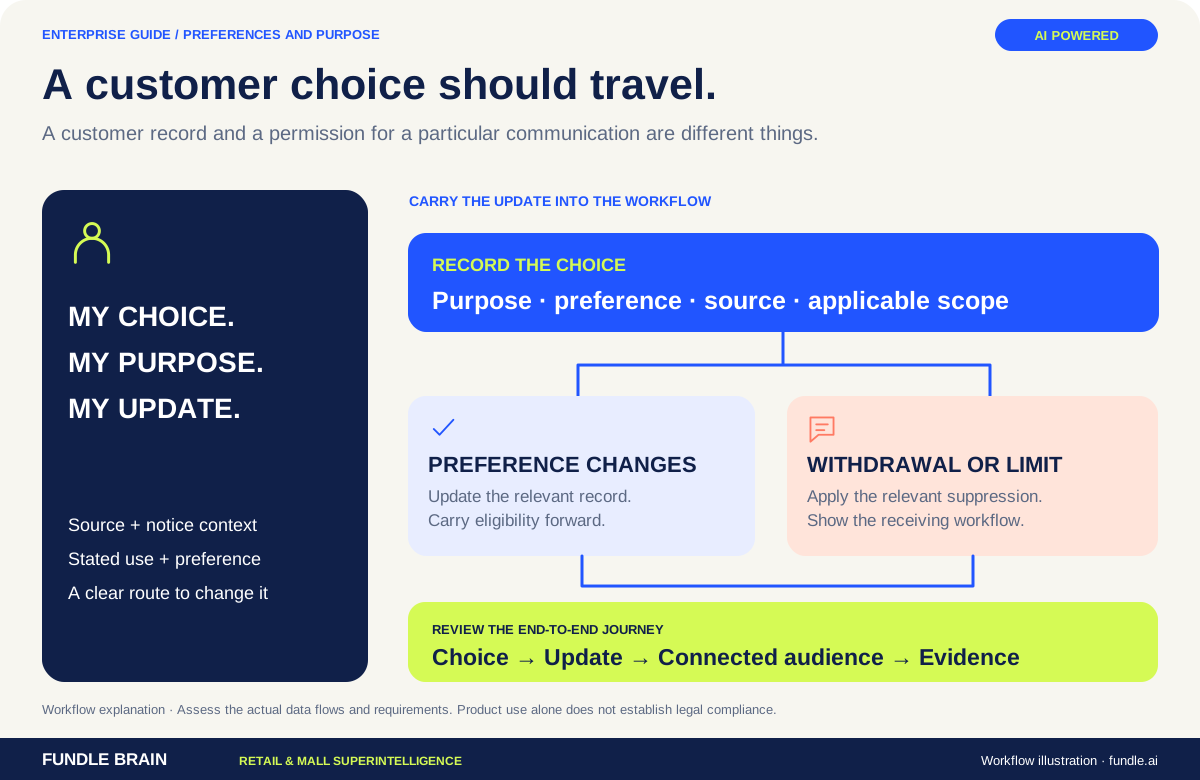
Preserve permission context
Carry communication eligibility, source and relevant preferences into activation. A record being available does not mean every downstream use is appropriate.
Keep business meaning consistent
Align sales, returns, categories, stores and time periods. Shared definitions matter when multiple teams ask the same question.
Measure the decision loop
Record the action and its outcome. Use permitted, relevant feedback to improve the workflow without implying unrestricted cross-customer data pooling.
Define the business question first
Start with a decision such as which customers need a relevant reminder or which stores require a sales review. That question determines the records, freshness and definitions required. Collecting more fields is not a substitute for a useful purpose.
Preserve identity and provenance
Record the source identifier and the rule used to connect records. Keep uncertain matches separate. Transaction reversals, duplicate records and missing dates can materially change a customer segment, so make these exceptions visible before activation.
Carry preferences into the workflow
A customer record and a permission to use it for a particular communication are different things. Include the relevant preference and suppression context when preparing an audience. Make updates available to the connected workflow rather than leaving them in a separate list.
Create an observable learning loop
Keep the question, source scope, audience or exception list, proposed action and outcome together. This makes later recommendations easier to assess. Start with one dependable loop and add adjacent sources when they change a real operating decision.
Put the guide to work.
Map the principle to your own data and operating process.
Explore the related workflowFundle editorial · Updated 12 October 2026 · Practical guidance; examples are illustrative.